
.
You(th) and Non-Formal Education are the Best!”, Snina, Slovakia 2014
.
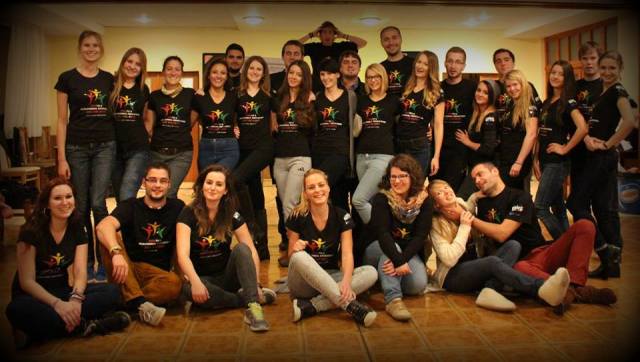
A project called You(th) and Non-Formal Education are the Best! was a 8 days Mobility of youth workers – Key Action 1 (KA1) of Erasmus+ programme. This activity gathered 35 participants – youth leaders and youth workers, coming from 13 European countries (Albania, Bulgaria, Czech Republic, Hungary, Italy, Lithuania, Macedonia, Poland, Romania, Slovakia, Spain, Turkey, Ukraine)). Project was realized by group of young people active in youth work called EPYG – Euro-project youth group on behalf of the partner network of youth organizations active in the youth work in the region of Snina town in eastern Slovakia.
Aims and objectives of the training course:
- To exchange the best practices in the field of youth work, to strengthen the exchange of experiences and competences within the youth organizations
- To implement, develop and support the non-formal education methods, their meaning in the education process and in a life of young people
- To analyze the role of NFE and to distinguish the differences in the formal, informal and non-formal education within the common Europe
- To support intercultural learning, analyse of intercultural diversity at international level – emphasize of cultural traditions and habits in different countries
- To explore the possibilities of Erasmus+ Programme and analyze the role and perception of non-formal education
- To increase the communication and presentation skills of youth workers in order to implement non-formal methods in an efficient way
- To encourage young people to use outdoor activities as a tool of non-formal learning process
Training course was based on non-formal learning process. It means that learning is based on your experience, your motivation and your needs. During the training course non-formal education methods and methods that assure balance between theory and practice used such as: workshops, presentations, outdoor education, co-operative games, individual work, small discussion groups, plenary work, group dynamics, personal challenges, theoretical input.

