Start to be activE+, Erasmus+ youth exchange
The European Union’s youth strategy for the period 2019-2027 established the framework for European cooperation in the field of youth, regarding “Involvement, connection and empowerment of young people.” Based on this strategy and the fact that the topic of democracy and active citizenship was a priority for our association, together with our partners from Poland, Spain, Slovakia, and Lithuania, we developed this project that encouraged and facilitated the participation of young people in the democratic life of Europe at local, regional, national, and European levels.
The project involved 30 participants (18 – 25 years old) from 5 countries (Lithuania, Poland, Slovakia, Spain, and Romania) and took place in the village of Traisteni, Valea Doftanei (Romania), between March 18 and 25, 2023. As the participation of young people with fewer opportunities was a priority for us and our partners, we decided to involve at least 3 young people with fewer opportunities from each country.
The main objectives of the project were:
- to offer the 30 young participants opportunities to get involved and learn to participate in civil society, until the end of the project;
- to sensitize the 30 young people during the mobility period regarding common European values and fundamental rights;
- to develop the digital skills of the 30 young people and their media education to increase their resistance to misinformation, fake news, and propaganda, as well as their ability to participate in democratic life;
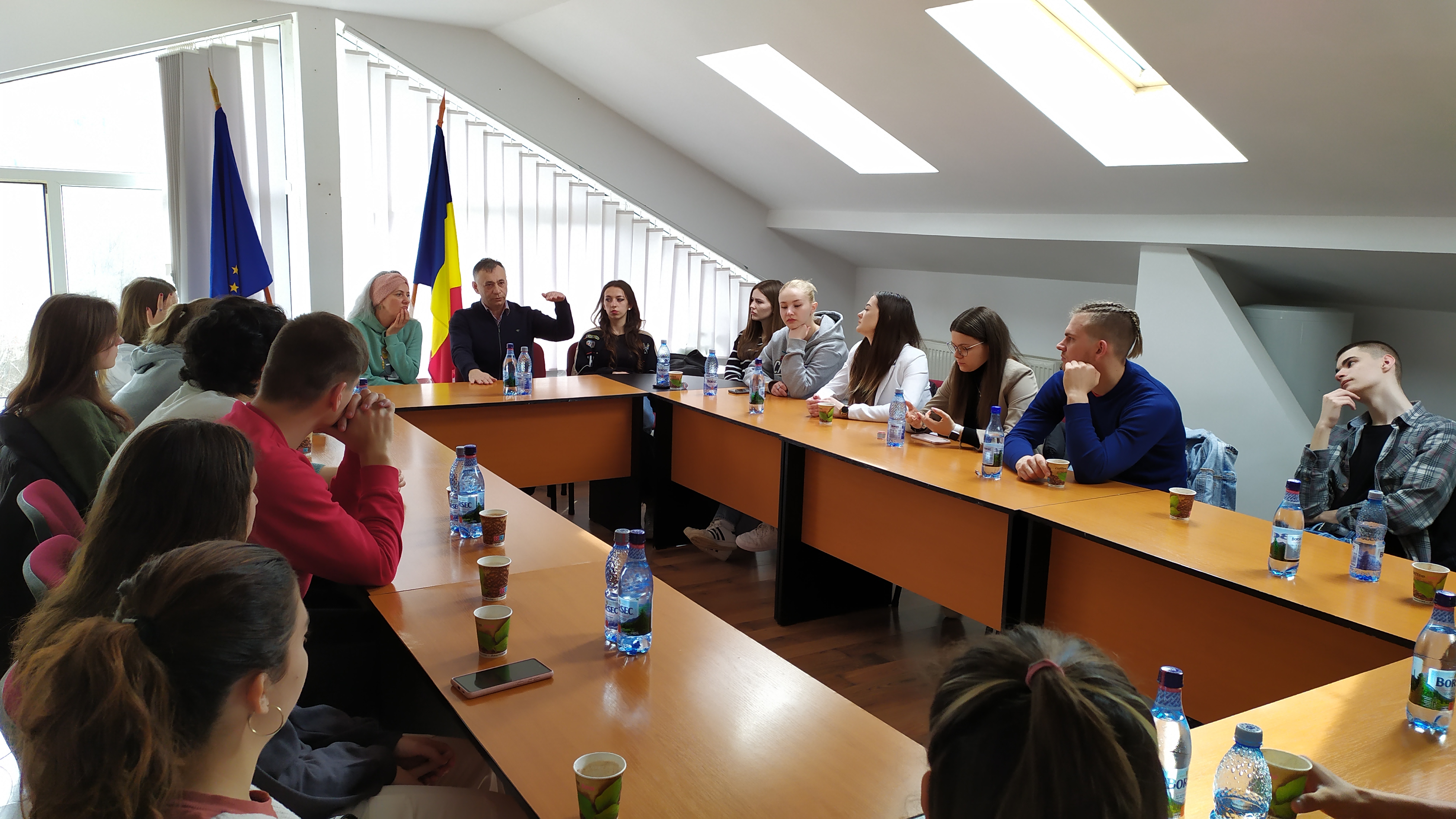
- to bring together young people and local decision-makers and contribute to the EU dialogue with young people by developing new local and European projects with the participation of local authorities.
The target group of the project was represented by approximately 200 young people from the 5 communities represented by the 5 organizations. The direct beneficiaries were the 30 young people who actively participated in all stages of the project, and gradually the target group was involved in other current activities (common activities during mobility, dissemination, and follow-up actions) within the project and after its completion. The participants in this project were young people from the 5 communities involved, members of the organizations, eager to assert themselves, with a vision, anchored in the reality of the community and aware of its needs and those of the young people, motivated to develop projects together with other young people, supporters of equal opportunities, positive, interested in the topics addressed and willing to participate throughout the duration of the project in the foreseen activities.
The expected final results were:
- one meeting with the local authorities in Valea Doftanei (where our organization carried out activities);
- an activity supported by the young participants in the local high school to promote active citizenship at the local level;
- at least 200 indirect beneficiaries represented by young people and youth workers from the 5 communities as participants in dissemination activities and follow-up actions;
- a short film and photos from the activities. The film was posted on the organization’s YouTube channel;
- visibility elements of the project and Erasmus+ financing (poster, banner, presentation folders);
- at least 5 media appearances for the presentation of the project and the final results (at least one per organization involved);
- a minimum of 2 appearances in the print/online press regarding the promotion of the project;
- a minimum of 2 E+ project proposals starting from the ideas of the young participants;
5 local activities/projects/actions initiated by young participants as follow-up activities in the 5 communities they belonged to.
The working methods were based on non-formal learning. The methodology that was used included methods based on communication (interaction, dialogue, open discussions), methods based on activities (exchange of experience, practice and experimentation), methods focused on the social side (partnerships, teamwork, group activity) and self-knowledge methods (creativity, discovery, responsibility, action).
This project was done with the support of the Erasmus+ Programm under 2022 accreditation: 2022-1-RO01-KA151-YOU-000056775.