YES for equality!, Erasmus+ youth exchange
Equality between women and men is a fundamental value of human rights recognized by the European Union (EU) and reflected in all European policies and projects. The EU Gender Equality Strategy presents policy objectives and actions to make significant progress by 2025 towards a gender-equal Europe. The goal is a Union where women and men, girls and boys, in all their diversity, are free to pursue their chosen path in life, have equal opportunities to thrive, and can equally participate in and lead our European society.
Gender inequality is a reality that women must face in their everyday life and Romanian society makes no exception from this situation. With 54.5 out of 100 points, Romania ranks 25th in the EU on the Gender Equality Index. Its score is 13.5 points below the EU’s score. The other country partners involved in project are all above Romania but not too much (Lithuania 58.4, Slovakia 56.0, Poland 56.6), except Spain with 73.7 points which is among the highest scores in the EU (ranking 3rd). This performance is mainly driven by nearly gender-balanced decision-making in the political sphere.
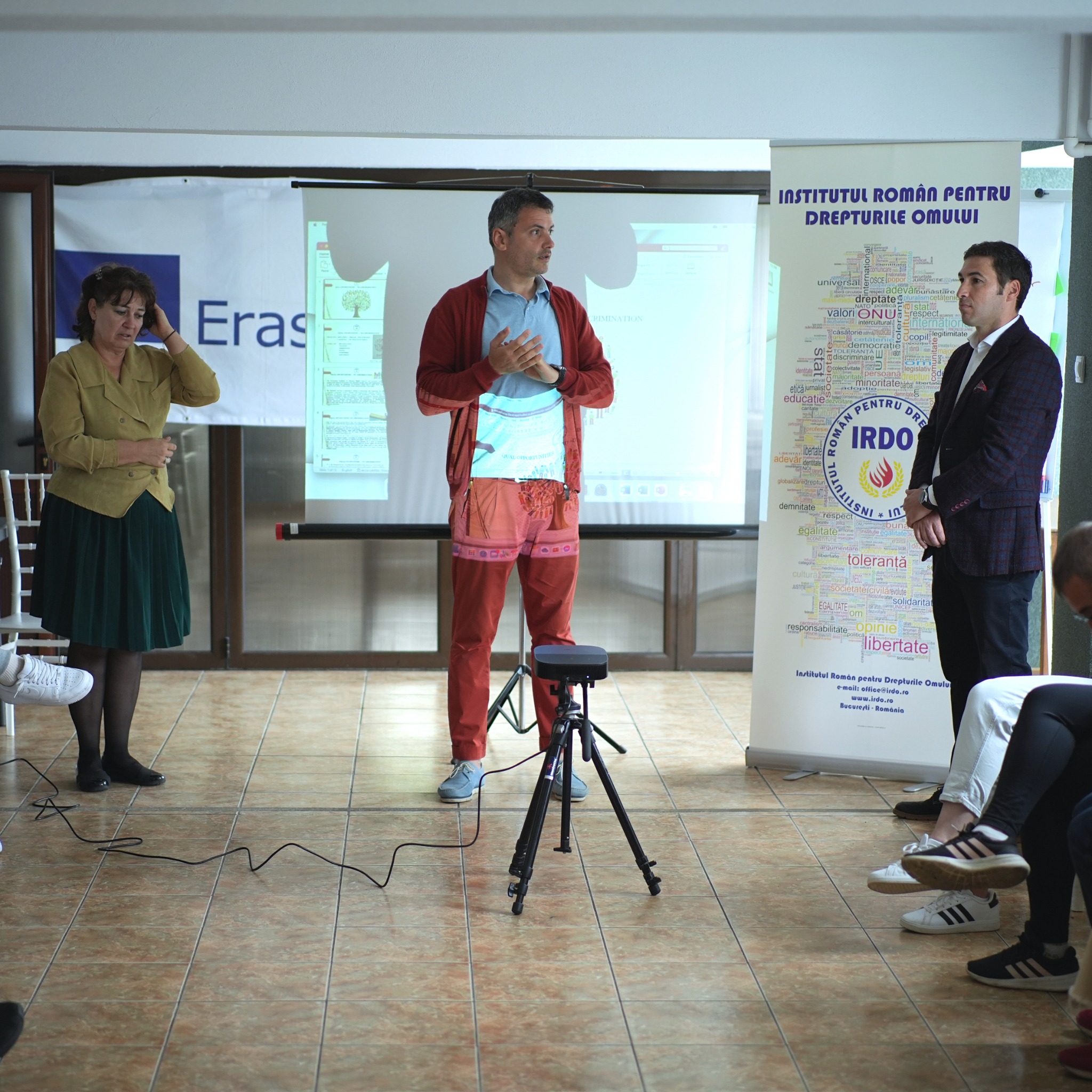
Considering the current situation (both local and national) and the EU Gender Equality Strategy, through this project, we invited different actors (local authorities, NGOs, youngsters) to put their “gender glasses” on and think critically about how they approached gender inequality and gender-based discrimination and how they could mainstream gender. The project focused on building an inclusive and peaceful society by promoting the combating of gender inequalities and gender-based violence, which was an important issue for our local community (especially in the countryside) and was in accordance with the EU Gender Equality Strategy 2020-2025 and the Strategy for Gender Equality 2018-2023 of the Council of Europe. More particularly, the project helped youngsters to understand women’s rights, explore the phenomenon of gender discrimination, gain the ability to recognize stereotypes and prejudices against women, challenge such phenomena within their own communities, and become empowered to implement gender equality education projects in the local community in the near future. Additionally, it ensured that participants embraced the values necessary for the creation of a human rights culture, such as respect, solidarity, and non-discrimination, as these were necessary prerequisites for gender equality.
The project involved 30 participants (18 – 25 years old) from 5 countries (Bulgaria, Poland, Slovakia, Turkey, and Romania) and took place in the village of Traisteni, Valea Doftanei (Romania), between May 20 and 27, 2023. The mobility also included a planning visit in advance, which took place in the same location, between February 18 and 19, 2023. Two people from each organization, the leader and one of the participants, participated in the preparatory visit. As the participation of young people with fewer opportunities was a priority for us and our partners, we decided to involve at least 3 young people with fewer opportunities from each country.
The working methods were based on non-formal learning. The methodology that was used included methods based on communication (interaction, dialogue, open discussions), methods based on activities (exchange of experience, practice and experimentation), methods focused on the social side (partnerships, teamwork, group activity), and self-knowledge methods (creativity, discovery, responsibility, action).
This project was done with the support of the Erasmus+ Programm under 2022 accreditation: 2022-1-RO01-KA151-YOU-000056775.